
The internet data tariff hike in Nigeria refers to the 50% increase in regulated telecom rates that the Nigerian Communications Commission (NCC) approved on January 29, 2025, the first such adjustment in twelve years.
The new benchmark pushed the regulatory floor for 1GB of data from N287.50 to N431.25, voice calls from N6.40 to N9.60 per minute, and SMS from N4 to N6.
Operators including MTN, Globacom, Airtel, and 9mobile began applying the higher rates from February 2025, and the increase survived a court challenge in 2026.
This guide walks through what changed, why the NCC allowed it, how Nigerians responded, and what has happened to data usage since.
What the NCC approved in January 2025
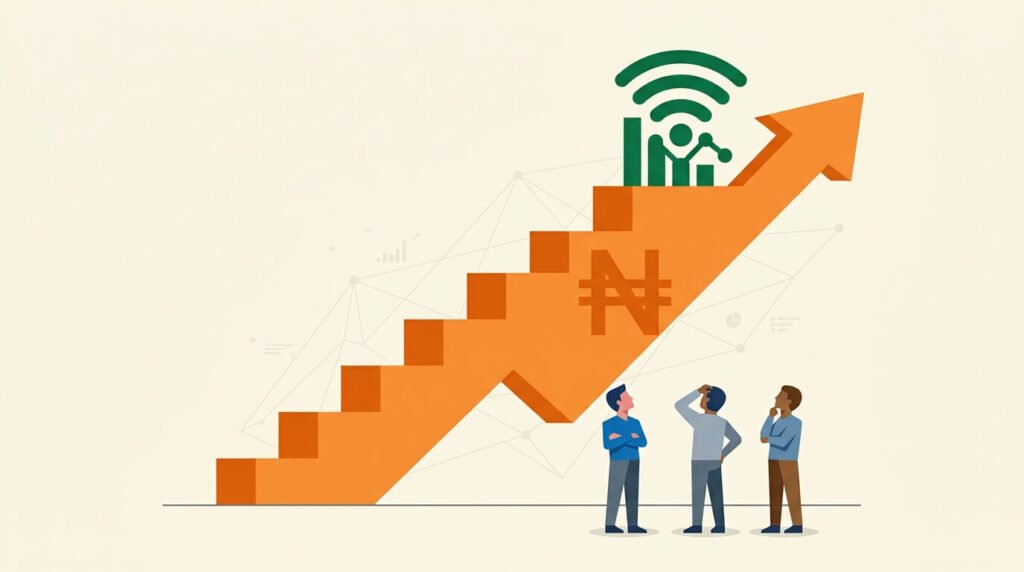
The NCC’s approval on January 29, 2025 raised the regulated benchmark tariffs that licensed telecom operators charge for voice, SMS, and data by roughly 50% across the board.
It was the first tariff review since 2013, meaning operators had worked under the same official ceiling for twelve years despite naira devaluation, inflation, and rising operating costs in that period.
The approval applied to all licensed operators, not just the dominant networks, and it set new benchmark figures that operators could price up to, rather than a single fixed retail price.
That distinction matters because actual bundle prices from MTN, Globacom, Airtel, and 9mobile still vary by plan size, promotion, and region, but all of them moved upward from their pre-2025 levels once the new ceiling took effect.
Timeline of the rollout
| Date | Event |
|---|---|
| January 29, 2025 | NCC approves a 50% increase in regulated telecom tariffs |
| February 2025 | MTN Nigeria begins implementing higher data and SMS prices, followed by Globacom, Airtel, and 9mobile |
| Late January 2025 | NLC, TUC, and CNG publicly reject the hike and call for reversal |
| Planned for February 4, 2025 | NLC mobilizes for a nationwide protest; a telecom workers’ union rejects the planned action, and the protest is later shelved |
| 2025 | Barrister Obioma Ezenwobodo files suit against the NCC and MTN Nigeria seeking to nullify the increase |
| April 22, 2026 | Federal High Court in Abuja strikes out the lawsuit for lack of standing; the 50% tariff adjustment remains valid and enforceable |
Old prices vs new prices
The NCC’s benchmark adjustment moved three core service categories: voice calls, SMS, and data.
These are regulatory floor and ceiling figures that define what operators are permitted to charge, not a single retail price every subscriber pays, since actual bundles are packaged differently across networks and plan sizes.
| Service | Pre-2025 benchmark | 2025 benchmark | Change |
|---|---|---|---|
| Voice calls | N6.40 per minute | N9.60 per minute | +50% |
| SMS | N4 per message | N6 per message | +50% |
| Data (1GB) | N287.50 | N431.25 | +50% |
What the benchmark numbers mean for actual bundles
These figures set the regulatory reference point, so a subscriber buying a 10GB or 40GB bundle from MTN or Airtel will not necessarily pay exactly ten or forty times the 1GB benchmark, because operators bundle data with validity periods, bonus data, and promotional discounts that shift the effective per-gigabyte cost.
What the benchmark increase guarantees is that the ceiling operators price against moved up by half, which is why every major network raised its bundle prices within weeks of the NCC’s approval rather than absorbing the cost themselves.
Why the NCC and operators pushed for the increase
Telecom operators, represented by the Association of Licensed Telecom Operators of Nigeria (ALTON), had been asking the NCC for a tariff adjustment since around 2022.
Their case rested on naira devaluation, the rising cost of diesel needed to power cell sites in a country with unreliable grid electricity, general inflation, and the cost of network equipment priced in dollars while revenue came in naira that had lost much of its value against that same equipment.
Operating under a tariff regime frozen since 2013 meant margins had been squeezed for years before the NCC acted.
The NCC and industry body GSMA framed the increase as a way to draw in further investment in the network rather than simply a pass-through of higher costs to subscribers.
Officials projected the adjustment could generate more than $150 million in additional investment and help expand 4G coverage from 90% to 94% of the population, extending mobile internet access to roughly 2 million more people among about 9 million total beneficiaries of the projected coverage improvement.
If you want the fuller cost breakdown behind Nigerian data pricing, including exchange rate exposure and infrastructure costs, you can see why data costs what it does in Nigeria for more detail.
How Nigerians and labour unions reacted
The 50% increase triggered immediate public backlash once operators began implementing it in February 2025.
The Nigeria Labour Congress (NLC), the Trade Union Congress (TUC), and the Congress of Nigeria Trade Unions (CNG) all publicly rejected the hike, arguing it added another cost burden on households already dealing with high inflation.
The NLC mobilized its affiliates and state councils for a nationwide protest planned for February 4, 2025.
That protest did not go ahead as planned. A telecom sector workers’ union rejected the NLC’s call to protest, and the NLC subsequently shelved the nationwide action.
The labour body did not drop the issue entirely, though, and later threatened strike action separately over the federal government’s handling of a related lawsuit, signaling that opposition to the tariff decision persisted even after the initial protest was called off.
Now that everyone is paying more for the same connection, it matters more than ever whether that connection holds up on a specific street, and Arandmi lets residents rate real internet and power reliability area by area so house hunters can check that before committing to a pricier plan.
The lawsuit against the NCC and MTN
Barrister Obioma Ezenwobodo filed a lawsuit against the NCC and MTN Nigeria Communications Plc seeking to nullify the 50% tariff increase, have subscribers reimbursed with interest, and secure N100 million in damages.
The suit cited what it described as untold hardship, economic deprivation, psychological distress, and pain caused by the higher tariffs.
On April 22, 2026, Justice M.G. Umar of the Federal High Court in Abuja struck out the case. The court found that the applicant failed to show any special interest in the subject matter beyond that of the general public, since the tariff increase applied universally to all subscribers rather than uniquely targeting or harming him.
The ruling did not evaluate whether the tariff hike itself was fair or unfair; it turned on legal standing.
As a result, the 50% adjustment remains valid and enforceable, and subscribers continue paying under the rates operators set following the NCC’s January 2025 approval.
Data usage kept climbing anyway
Despite the 50% tariff increase, national data consumption in Nigeria did not fall.
Average data usage per subscriber rose 30.91% year-on-year between May 2024 and May 2025, climbing from 7.37GB to 9.86GB per month, and total monthly national data usage rose from 771,993.56 terabytes to 1,043,431.98 terabytes over the same period. Internet subscriptions also grew, from 137.12 million to 141.57 million.
| Metric | May 2024 | May 2025 | June 2026 |
|---|---|---|---|
| Average usage per subscriber (monthly) | 7.37GB | 9.86GB | 14.8GB |
| Total national monthly usage | 771,993.56 TB | 1,043,431.98 TB | 1,532,172.67 TB |
| Internet subscriptions | 137.12 million | 141.57 million | not separately reported |
| Total active telecom subscriptions | not separately reported | not separately reported | 192.23 million |
| Broadband penetration | not separately reported | not separately reported | 56.79% |
By Q1 2026, Nigeria set a new data consumption record of roughly 4 billion gigabytes used nationally in the quarter, about 4 million terabytes.
By June 2026, MTN reported average usage per subscriber had reached 14.8GB per month, up 15.2% year-on-year, and total national monthly consumption hit 1,532,172.67 terabytes.
Total active telecom subscriptions reached 192.23 million by that point, giving a teledensity of 88.67%, while broadband subscriptions reached about 123.11 million, a penetration rate of 56.79%, up from 48.01% in July 2025.
Anyone comparing their own usage against the national trend can check how much data the average Nigerian uses for a fuller breakdown by plan type and region.
How Nigerians are adjusting to higher data prices
Rather than cutting usage, most subscribers changed how they buy data.
“One consumer quoted in coverage of the price changes said she had to revert to weekly data plans after the February 2025 increases, before eventually finding a roughly 100GB plan for about N18,000 per month by April 2025”.
That pattern, shifting toward larger bundles with better per-gigabyte value once a subscriber can afford the upfront cost, or temporarily downgrading to shorter validity plans when cash is tight, shows up across the market rather than in isolated cases.
This behavior helps explain why national consumption kept rising even as prices went up: Nigerians did not stop using data; they changed which plans they bought and when they topped up, absorbing the higher cost by adjusting their buying habits instead of reducing how much they relied on mobile internet for work, business, and daily communication.
The NCC’s decision to raise tariffs sits inside its wider mandate over how telecom services are priced, licensed, and monitored across the country.
For readers who want to understand the NCC’s broader regulatory role beyond this one tariff decision, or who are trying to assess the country’s connectivity landscape before choosing where to live or set up a business, those guides cover the regulatory and coverage context this article builds on.
Frequently asked questions
Did the NCC’s 50% tariff hike apply to every telecom operator in Nigeria?
Yes. The NCC’s January 29, 2025 approval applied to all licensed telecom operators, including MTN, Globacom, Airtel, and 9mobile, since it adjusted the regulatory benchmark rather than approving a change for a single company.
Each operator then set its own retail prices at or below the new ceiling, which is why bundle prices differ slightly between networks even though they all moved upward from their 2013 to 2024 levels following the same regulatory decision.
The Federal Competition and Consumer Protection Commission (FCCPC) publicly noted the NCC’s 50% approval and emphasized that any tariff increase must translate into significant service improvements for consumers.
Is the 50% data tariff increase still in effect in 2026?
Yes. The lawsuit seeking to nullify the increase was struck out by the Federal High Court in Abuja on April 22, 2026, with Justice M.G. Umar ruling that the applicant lacked the legal standing to challenge a tariff that applied universally to the public rather than uniquely to him.
Because the case was dismissed on procedural grounds rather than decided on the merits of the pricing itself, the 50% adjustment approved by the NCC in January 2025 remains valid and enforceable for all subscribers.
Why did the NLC cancel its planned protest against the tariff hike?
The Nigeria Labour Congress mobilized its affiliates and state councils for a nationwide protest scheduled for February 4, 2025, but a telecom sector workers’ union rejected the NLC’s call to join the action.
Facing that internal disagreement within the labour movement, the NLC shelved the planned protest rather than proceeding without full backing.
The NLC later pursued a separate threat of strike action tied to the government’s handling of the related court case, showing that opposition to the hike continued in other forms.
Why did Nigerians keep using more data even after prices went up?
Data had become essential enough for work, business transactions, education, and communication that most subscribers adjusted their buying patterns instead of reducing usage.
Consumers shifted toward larger bundles that offered better value per gigabyte once they could afford the upfront cost, or temporarily used weekly plans when funds were tighter, rather than cutting back on how much they relied on mobile internet day-to-day.
That behavior is consistent with the national numbers, which show usage per subscriber and total consumption both rising well past the 2025 tariff increase through 2026.
One Response