
NCC internet regulations in Nigeria are the rules the Nigerian Communications Commission sets for internet access providers and, increasingly, for online platforms operating in the country, covering everything from data breach reporting to service quality and consumer complaints.
These rules come from the Nigerian Communications Act 2003, the Nigeria Data Protection Act 2023, and a newer Internet Code of Practice that is still being finalized.
For an ordinary household or small business, they translate into concrete things: how fast a provider is required to respond to outages, what happens to your data if a platform is breached, and where you can complain if your service does not match what you paid for.
What is the NCC and what does it regulate?
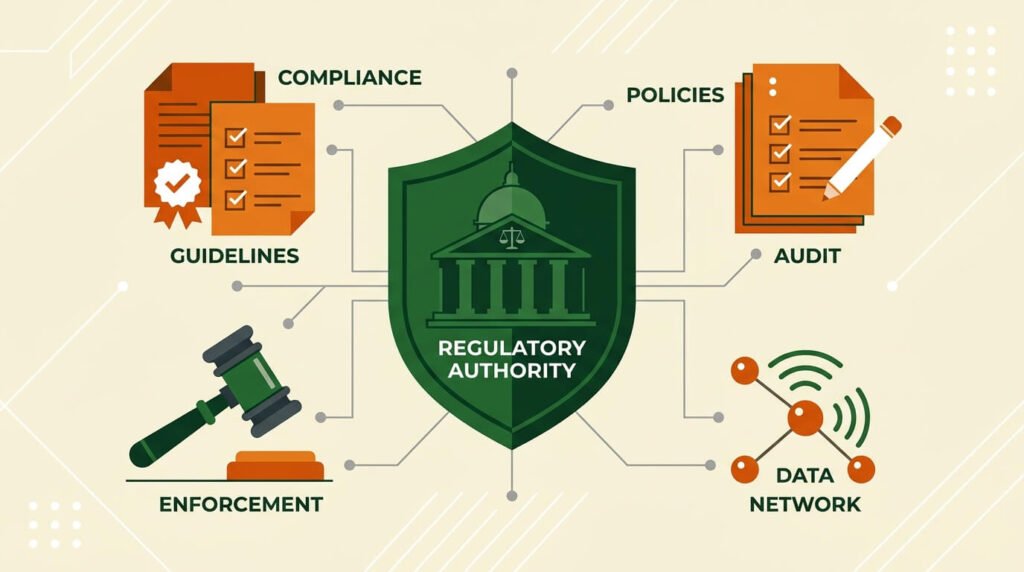
The Nigerian Communications Commission is the independent regulator for Nigeria’s telecom sector, established under the Nigerian Communications Act 2003.
It licenses network operators and internet access service providers, sets technical and consumer-protection standards, and enforces compliance across the industry.
Its remit covers mobile and fixed operators, internet service providers, and, under newer rules, some of the online platforms that ride on top of that infrastructure.
NCC’s core areas of regulation include the following.
- Licensing and oversight of telecom operators and internet access service providers (IASPs).
- Consumer protection, including complaint handling and service-quality enforcement.
- Data protection compliance in coordination with the Nigeria Data Protection Commission under the Nigeria Data Protection Act 2023.
- SIM registration and identity verification, including the SIM-NIN (National Identification Number) linkage rules.
- Broadband policy, including the National Broadband Plan and infrastructure targets.
Anyone trying to understand internet in Nigeria as a whole, not just the regulatory side, will find that NCC’s rules sit underneath almost every part of it: pricing, coverage, data protection, and the complaint process a subscriber uses when something goes wrong.
The Internet Code of Practice: what it requires
The Internet Code of Practice is NCC’s rulebook for licensed internet access providers and online or digital communication platforms operating in Nigeria, and it sets requirements that go beyond the basic licensing conditions operators already follow.
It was developed as a 2025/2026 framework and, as of this writing, remains under review rather than fully finalized.
Once it is issued in final form, platforms will have six months to put their community rules in place, which is one sign that the Code is meant to be implemented in stages rather than all at once.
Content and consumer-safety obligations
Under the Code, licensed providers and platforms are required to build content moderation tools and parental controls into their services, and to publish community rules or guidelines that explain how they moderate consumer use.
The Code also states that consumers have the right to create, share, and access lawful information without discrimination, which sets a baseline for how platforms are allowed to treat user content.
Providers are further required to be transparent about how they manage network traffic, so that practices like throttling or prioritizing certain data are not hidden from subscribers.
Data-protection and breach-reporting obligations
The Code requires providers to comply with the Nigeria Data Protection Act 2023, and it adds a specific deadline: if a data breach occurs, the provider must notify both the affected users and the NCC within 48 hours.
It also bans the unauthorized harvesting of consumer data and requires providers to submit biannual compliance reports covering their operations, any content-takedown requests they received, and how they are adhering to the Code overall.
On top of this, NCC has set out a cybersecurity framework that providers are expected to follow, covering how they secure their networks and respond to incidents beyond data breaches alone.
Quality of Service and consumer protection rules
“The Nigerian Communications Commission’s (NCC) Quality of Service (QoS) regulations set measurable network‑performance standards and provide grounds to penalize operators that fall short; in January 2026, as broadband subscriptions stood at about 109.6 million, the NCC moved to tighten QoS enforcement in response to a rapidly growing but strained market.”
| QoS focus area | What it covers |
|---|---|
| Network availability | Minimum uptime expectations for mobile and fixed broadband networks |
| Call and data drop rates | Limits on dropped calls and failed data sessions |
| Congestion management | Requirements to address network congestion in high-traffic areas |
| Complaint resolution time | Expected timeframes for operators to resolve subscriber complaints |
| Transparency in traffic management | Disclosure of any practices that slow or prioritize certain traffic |
These standards apply to operators, not to any single street or building, so a network can meet NCC’s technical benchmarks on paper while still delivering a poor connection in a specific area because of local infrastructure, congestion, or damaged fiber.
That gap between regulatory compliance and lived experience is exactly why a resident planning a move needs more than a QoS report to judge a neighborhood.
Is the Internet Code of Practice law yet?
Here is where the regulatory picture requires a closer look than most summaries give it.
The Internet Code of Practice remains under review as of this research, not fully finalized and enforceable in the way an existing NCC regulation is.
The six-month clock for platforms to publish their community rules starts only once the Code is issued in final form, so that requirement has not yet begun to run.
In July 2026, Nigeria paused some internet-platform rules pending a unified digital policy, which is a direct sign that lawmakers and regulators are still negotiating how these obligations should be structured and enforced.
This matters for anyone trying to plan around the Code today. Treating it as settled law risks assuming protections (like the 48-hour breach notification or mandatory parental controls) are already fully enforceable everywhere, when in practice the framework is still being shaped and could change again before it takes final effect.
The more accurate reading is that NCC has published a strong policy direction, providers are being asked to prepare for it, and enforcement mechanisms are still being worked out.
Anyone relying on this for compliance or consumer-rights purposes should check NCC’s current publications rather than treating any single date as final.
Regulation like this sets the rules operators are supposed to follow, but it cannot tell a house-hunter whether the internet works on a specific street in Lekki or Wuse, which is why Arandmi lets residents rate real internet and power reliability area by area before someone signs a lease.
How regulation connects to Nigeria’s broadband growth
NCC’s regulatory push and Nigeria’s broadband growth have moved together, not on separate tracks. When NCC tightened QoS rules in January 2026, broadband subscriptions stood at roughly 109.6 million.
By May 2026, that figure had climbed to 121,643,718, a 56.11% penetration rate, and by June 2026 it reached 123.11 million, or 56.79% penetration, up from 48.01% in July 2025.
Total active telecom subscriptions across all operators hit 192.23 million by June 2026, with teledensity at 88.67%.
That growth has not been enough to hit the National Broadband Plan’s original target of 70% penetration by the end of 2025, which NCC still describes as its primary objective for the sector.
Readers tracking broadband subscriber numbers in more detail will see the same pattern: strong month-on-month gains that still fall short of the plan’s original timeline, partly because of factors regulation alone cannot fix quickly, including more than 19,000 fiber cuts and roughly 3,000 equipment theft or vandalism incidents recorded between January and August 2025, along with high Right-of-Way fees in some states (eleven states now charge none at all) and rising energy costs for base stations.
It is also worth separating broadband subscriptions from actual internet use. As of October 2025, unique internet users made up about 45.5% of Nigeria’s roughly 239-million population, or 109 million people, a different measure from the subscription and penetration figures above.
Anyone comparing these numbers should check the internet penetration rate definition being used, since subscription counts, penetration percentages, and unique-user figures answer different questions and are not interchangeable.
How to file a complaint with the NCC
If an internet service provider is not meeting its obligations, whether on service quality, billing, or a data-related issue, NCC provides a formal complaint channel, and following it in order improves the odds of a resolution.
- Contact the provider’s customer service first and get a complaint reference number or written acknowledgment, since NCC generally expects this step before it will intervene.
- Allow the provider a reasonable window to resolve the issue, typically the timeframe stated in its own service agreement or complaint policy.
- If the issue remains unresolved, file a complaint with NCC directly through its consumer complaint channels, including its toll-free line and online complaint portal, providing the provider’s reference number and details of the original issue.
- Keep records of all communication, including dates, names of representatives, and any written responses, since these support the complaint if it needs escalation.
- Follow up with NCC if there is no response within the timeframe it communicates, referencing the original complaint number.
This process applies to service-quality complaints, billing disputes, and data-protection concerns alike, though data breach complaints may also involve the Nigeria Data Protection Commission depending on the nature of the issue.
Regulation explains what internet providers and platforms are required to do; it does not describe what service is like in any one place. The FAQs below cover common questions about how these rules work in practice.
Frequently asked questions
Does NCC regulate social media platforms directly?
NCC’s Internet Code of Practice extends some obligations, including content moderation tools, community guidelines, and data-protection compliance, to online and digital communication platforms operating in Nigeria, not only to licensed telecom and internet access providers.
However, the Code is still under review, and some platform-specific rules were paused in July 2026 pending a unified digital policy, so the exact scope of direct social media regulation is still being finalized rather than fully settled.
What should happen if my data is breached by an internet provider?
Under the Internet Code of Practice, a provider that experiences a data breach is required to notify both the affected users and the NCC within 48 hours of the breach, and it must also comply with the broader requirements of the Nigeria Data Protection Act 2023.
In practice, this means a subscriber should expect direct notification from the provider if their data was affected, along with information about what data was exposed and what steps are being taken, though enforcement of this timeline depends on the Code reaching final, enforceable status.
Why did broadband growth continue even as NCC tightened rules in 2026?
Regulation and growth are not opposing forces in this case.
NCC tightened Quality of Service rules in January 2026 specifically because broadband subscriptions were already climbing toward 109.6 million, and by June 2026 that number had reached 123.11 million, or 56.79% penetration.
Tighter QoS standards are meant to keep service quality from degrading as more subscribers join the network, so the two trends reflect a regulator responding to real growth rather than one working against it.
How is NCC’s SIM-NIN rule connected to internet regulation?
In November 2025, NCC moved to end the sale of pre-registered SIM cards and tighten the linkage between SIM cards and National Identification Numbers (NINs).
This is primarily an identity-verification and security measure rather than a direct internet-service rule, but it affects internet access indirectly because most Nigerians connect to the internet through mobile data on a registered SIM.
A subscriber without a properly linked NIN could face restrictions on activating or keeping a SIM active, which would also cut off their mobile internet access until the linkage is resolved.
2 Responses