Nasarawa GRA
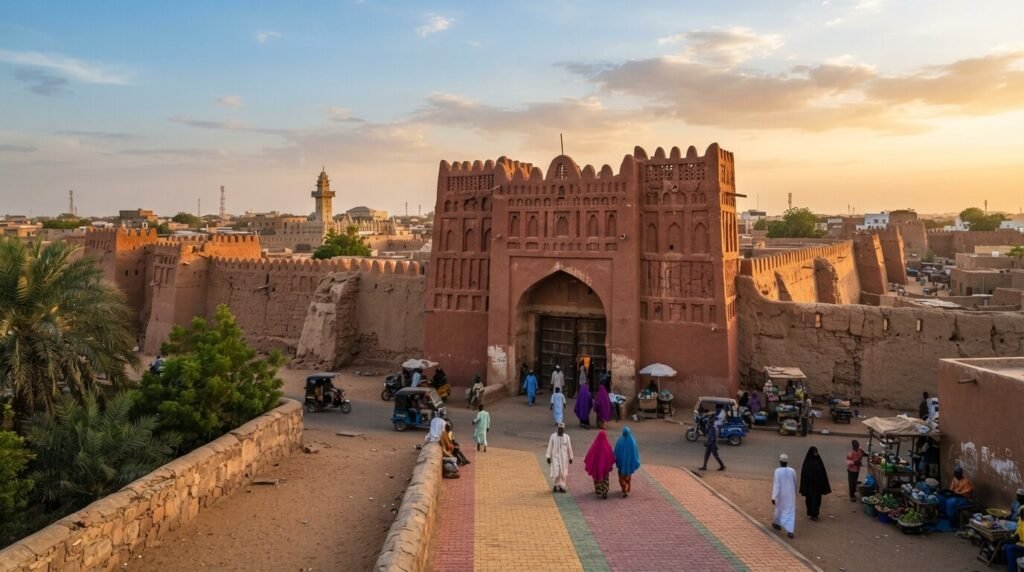
A low-density government reservation area in Kano municipality.

Kano State sits in Nigeria’s north, with Kano city, the country’s largest city after Lagos, as its capital. The state was created on 27 May 1967.
Kano borders Katsina to the northwest, Jigawa to the northeast, Bauchi to the southeast, and Kaduna to the southwest.
The Hausa and Fulani make up most of the population, and Hausa remains the dominant language spoken across the state.
Kano is Nigeria’s second largest industrial center after Lagos, built on textiles, leather tanning, and pharmaceuticals, alongside a growing Islamic banking sector. Agriculture still matters too, especially groundnuts, cotton, and millet grown on the surrounding plains.
Kurmi Market, founded in the 15th century, remains one of West Africa’s oldest and busiest trading centers, and the ancient city wall that once ringed old Kano still stands in sections. The Emir’s Palace, known as Gidan Rumfa, and Dalla Hill, considered the site of Kano’s earliest settlement, round out the city’s historic core.
Kano has produced Africa’s richest man, Aliko Dangote, along with former Central Bank governor Sanusi Lamido Sanusi and Murtala Mohammed, the military leader who briefly ran Nigeria in the mid 1970s.
A low-density government reservation area in Kano municipality.